Earth, Lightly is a research project exploring the role of ornamentation in earthen architecture. Lisogorskaya and Song aimed to connect design practice with material culture, learning through making and fostering collaboration between designers, craftspeople, researchers, and local industries. This informed the development of prototypes for earth-based works exploring the aesthetic and haptic potentials of art and architecture, with the explicit aim of translating research into practice through a prospective client project for the Arper Feltrin Foundation – namely, the retrofit of an industrial warehouse for Villa Filanda Antonini in Treviso – both in terms of a material palette and an emerging architectural language.
“This informed the development of prototypes for earth-based works exploring the aesthetic and haptic potentials of art and architecture, with the explicit aim of translating research into practice through a prospective client project for the Arper Feltrin Foundation.”
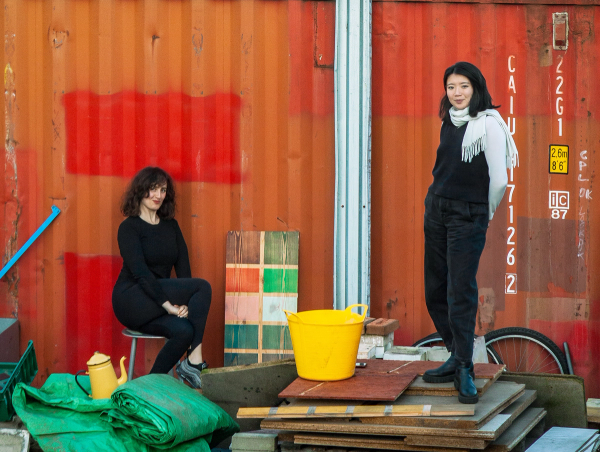
Maria Lisogorskaya and Kaye Song, photo courtesy of Assemble
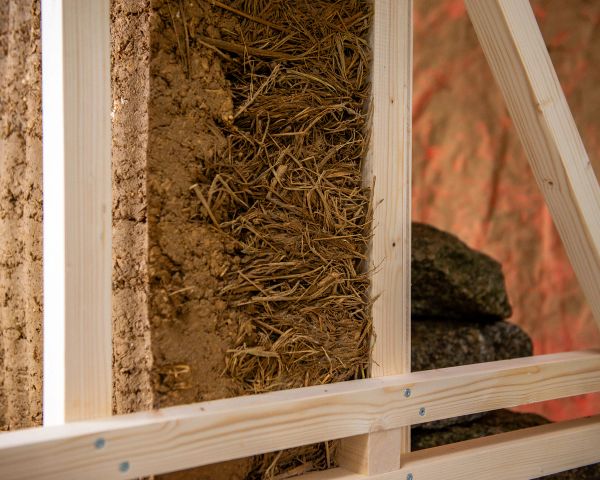
The Experimental Fellowship allowed Lisogorskaya and Song to study and experiment with Light Earth as a lesser-known building method, which typically coats agricultural byproduct fibres in a clay-rich earth slip for use as infill in timber-framed walls. It gained attention in the 1980s in Europe, the US and New Zealand as an environmentally responsible alternative to conventional insulation, although it was first documented as its own building technique in Germany from the 1930s. Lisogorskaya and Song believe Light Earth building holds great potential as a construction method that can create large volumes while remaining lightweight. It shifts from extractive to generative economies by using grown materials and tapping into existing waste streams, and it can achieve effective acoustic and thermal insulation with only a fraction of earthen material typically required in earth building. By combining this with a more artistically-led approach, their intention was to both expand the palette and vocabulary of earth building, and to accelerate its uptake and accessibility in the contemporary building industry.
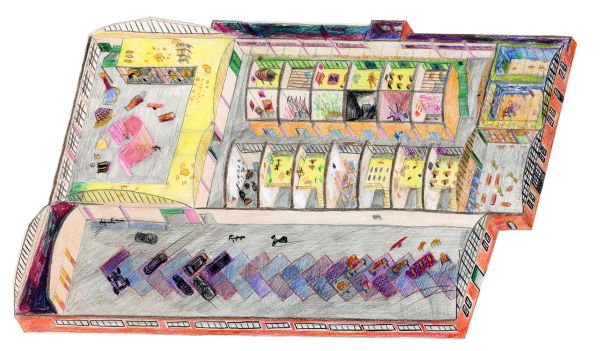
A variety of programmes are planned within one building, requiring thermal and acoustic insulation, drawing courtesy of Assemble
For Lisogorskaya and Song, the Experimental Fellowship provided invaluable time and expert support to explore earth-based construction methods in a way rarely possible within live architectural projects. Assemble’s wider aim is to design ecologically and to champion innovative and sustainable material thinking at a range of scales; specifying bioregional materials and delivering projects that respond meaningfully to environmental, social, and economic contexts. The Fellowship deepened this commitment, offering first-hand understanding of working with earth and fibres, and revealing both the potential and the limitations of these materials within contemporary practice. More specifically, Lisogorskaya and Song, and Assemble more broadly, learnt in more depth about Light Earth construction methods and developed confidence in specifying this often overlooked insulation technique in a wide range of projects; while also acknowledging further questions and challenges depending on context.
The Fellowship has laid important groundwork for their ongoing material research and has connected them to an international network of experts, suppliers and researchers, many of whom they now continue to be in touch with for future collaborations. These relationships have been one of the most valuable outcomes of the programme and will continue to inform their work at Assemble and beyond.
Looking ahead, Light Earth construction will likely form a significant part of Assemble’s live projects; rendered with earthen plasters and pigmented with mineral pigments. At a larger scale they see a lot of potential in connecting with industrial partners to optimise this method; reconciling off the shelf systems with artisanal expression in architecture. All of these ongoing strands would support the delivery of a beautiful and buildable wall system for use in live projects; the application of Earth, Lightly.
In Phase 1, Lisogorskaya and Song visited studios, foundries, factories, libraries, laboratories, churches, museums, and schools, meeting a wide network of practitioners across Germany and Switzerland. These encounters helped situate their research within the long history of earth building, while revealing the technical and cultural challenges facing contemporary construction.
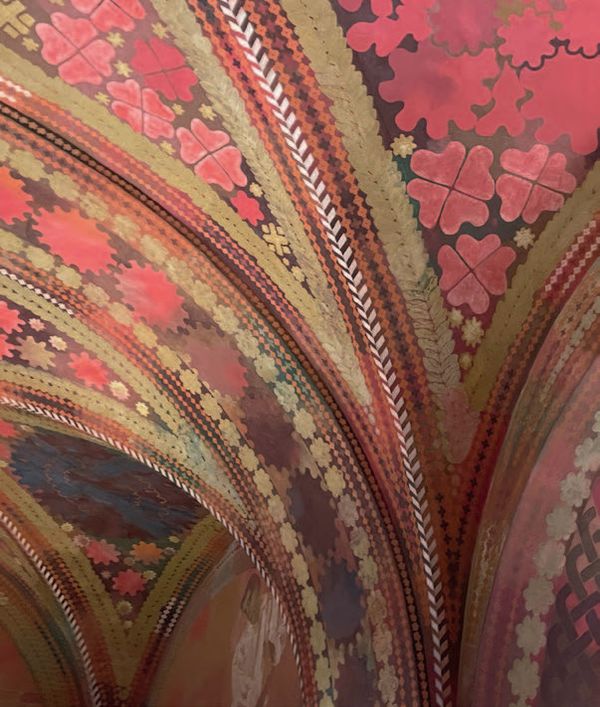
Research field trip, all photos by Maria Lisogorskaya and Kaye Song
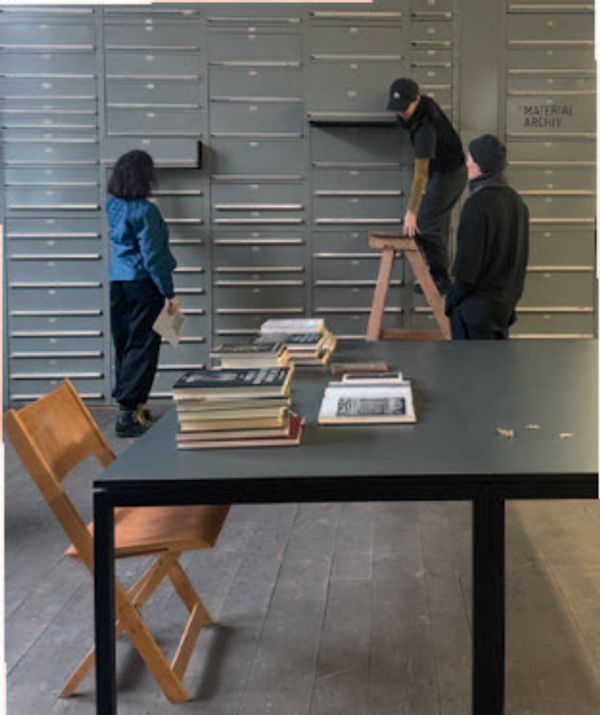
Research field trip, all photos by Maria Lisogorskaya and Kaye Song
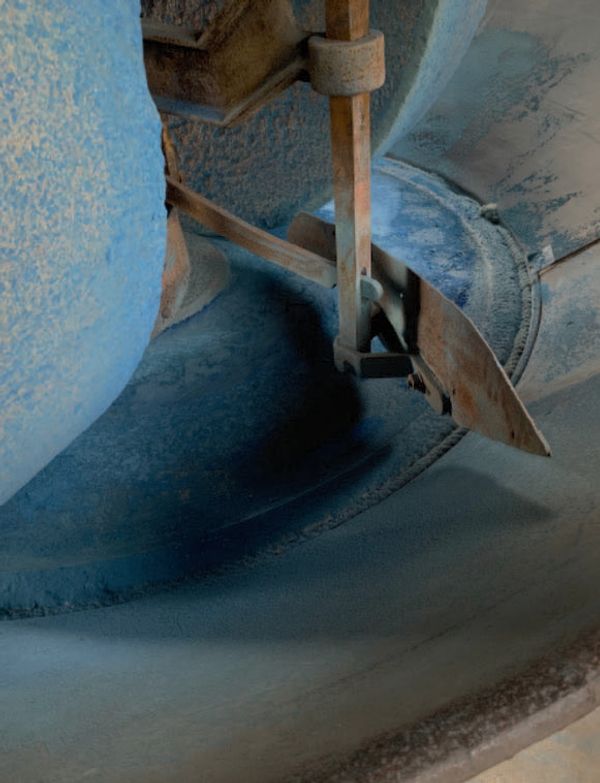
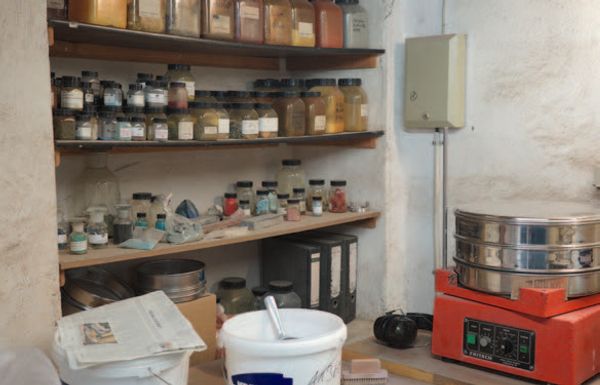
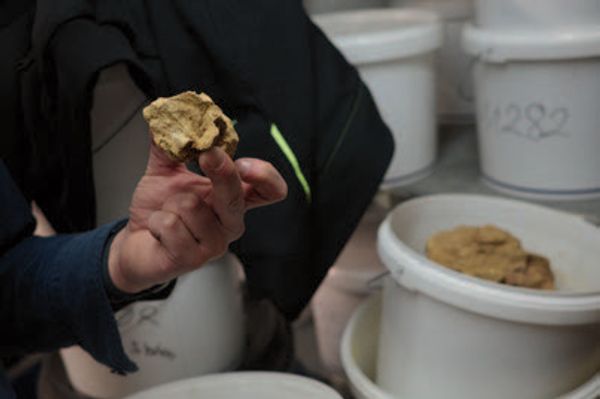
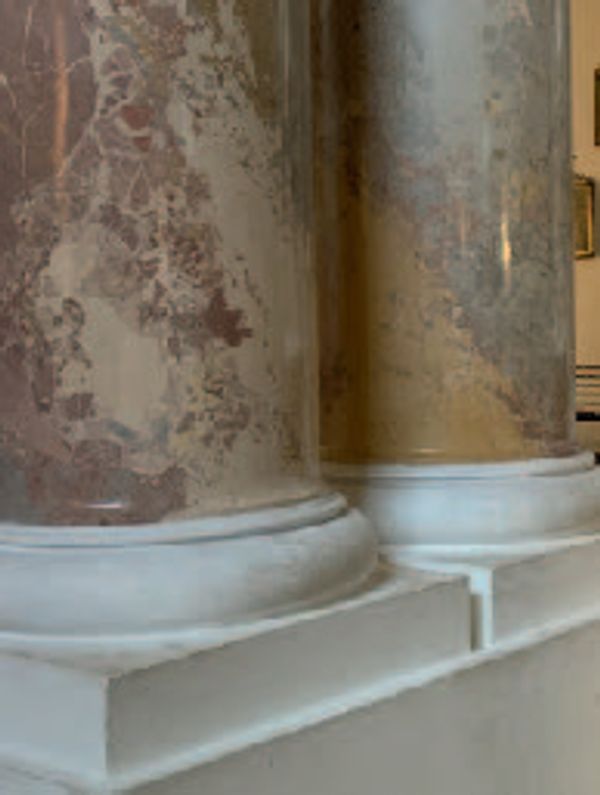
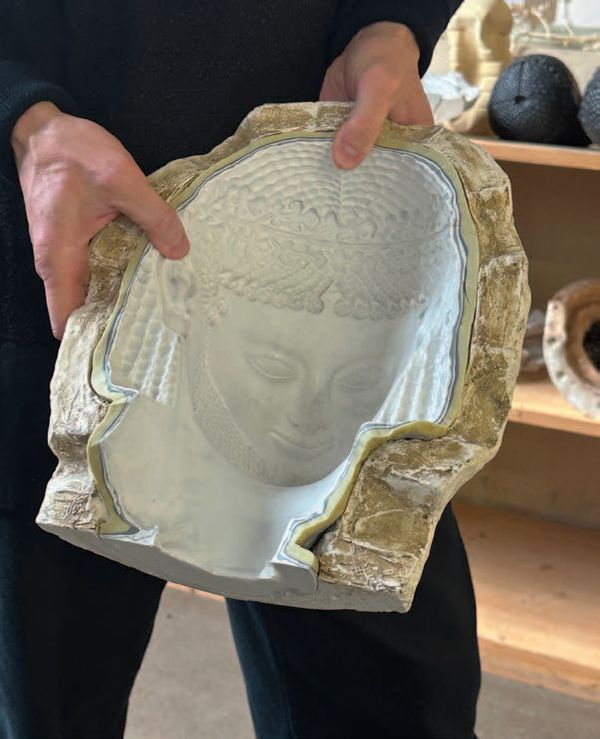
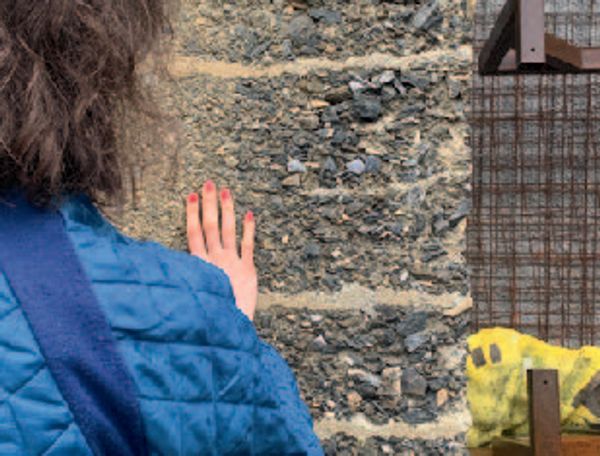
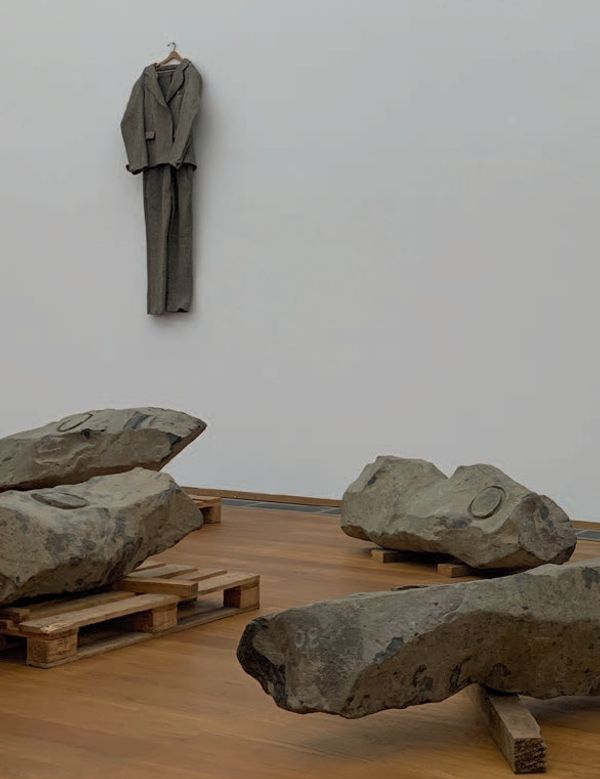
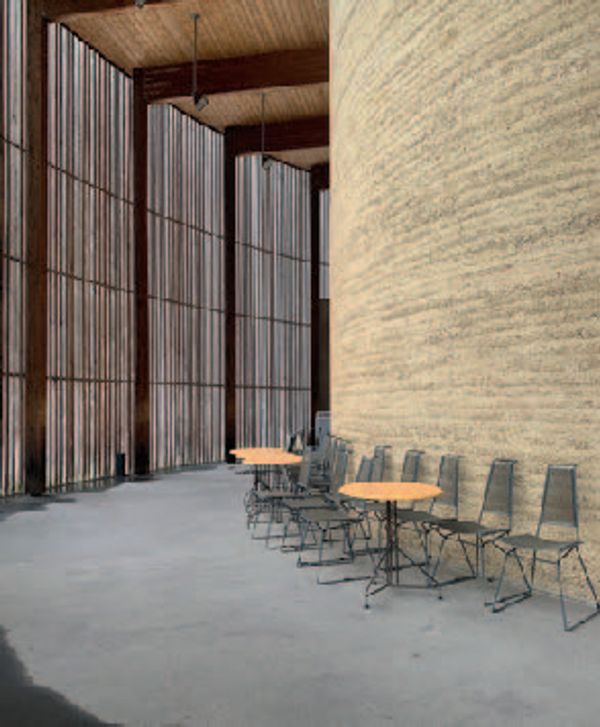
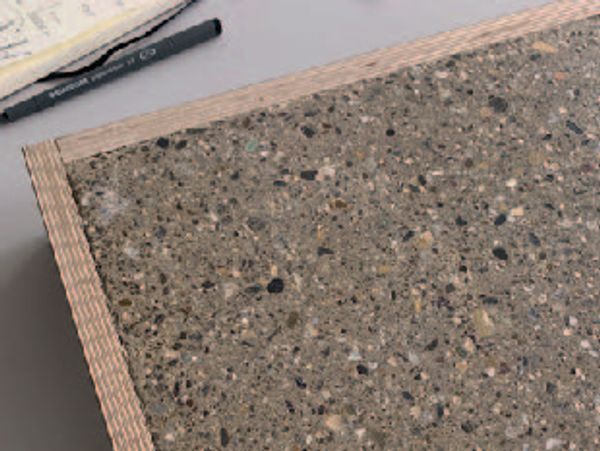
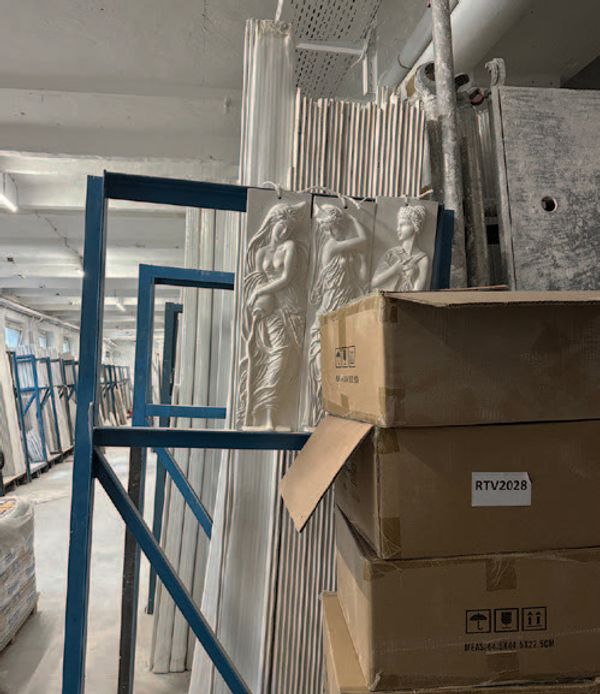
The Fellowship began with a spirit of curiosity and openness, prioritising exploration before moving into targeted material testing. As Fellows, Lisogorskaya and Song embraced the opportunity to learn from regional vernacular construction practices and to engage with pioneering researchers, industry specialists, artisanal workshops, and larger-scale manufacturers.
This initial phase of the Fellowship provided a critical foundation, situating their work in Treviso within the broader legacy and contemporary culture of earth building and artistic production in context of the short residency at Sittewerk Foundation, and informing the subsequent stages of material development and prototype experimentation at the Bauhaus Earth Workshop.
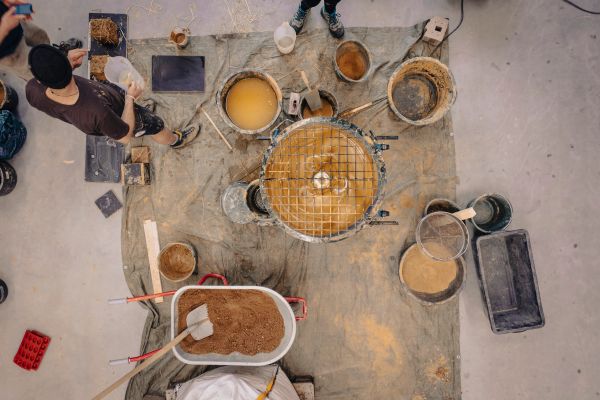
In Phase 2, they worked hands-on at Stiftung Sitterwerk in St. Gallen, experimenting with traditional Light Earth techniques and integrating methods from art production to test how variations in process could yield different aesthetic and structural outcomes. With the support of Wayne Switzer, they refined their focus on Light Earth as an area for continued exploration.
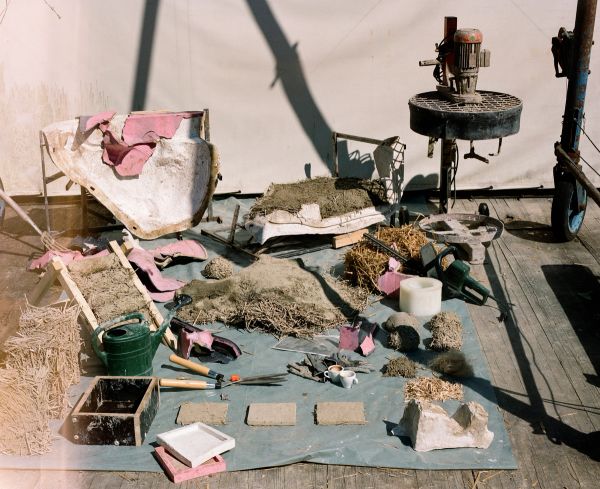
An assembly of the tests made and tools used during the resident at Sitterwerk, St. Gallen, photo courtesy of Maria Lisogorskaya and Kaye Song
The field trips and research led Lisogorskaya and Song to pursue hands-on material exploration during a four-day residency at the Sitterwerk in St. Gallen, which provided initial insights into the base material and methods for this investigation. The proximity of the Material Archive at Sitterwerk Foundation (Werkstoffarchiv) to the neighboring Art Foundry (Kunstgiesserei) St. Gallen created ideal conditions for specialist mentoring and experimental work with traditional light earth building. This setting allowed them to explore how these techniques could intersect with advanced art production methods, testing variations in materials and processes to achieve diverse aesthetic outcomes.
The Light Earth Horse Head prototype was developed with the guidance of Wayne Switzer, earth building expert and responsible of the Material Archive at Sitterwerk. Locally available materials (earth, straw, sheep wool) and an existing mould, originally created by artist Xu Zhen as a copy of the Parthenon Sculptures, was provided from the Kunstgiesserei’s casting workshop.
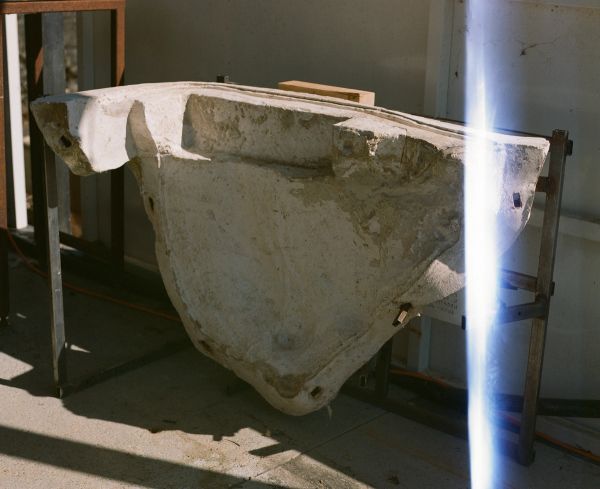
Material exploration with light earth horse head during residency at Sitterwerk, St. Gallen, all photos in this series courtesy of Maria Lisogorskaya and Kaye Song
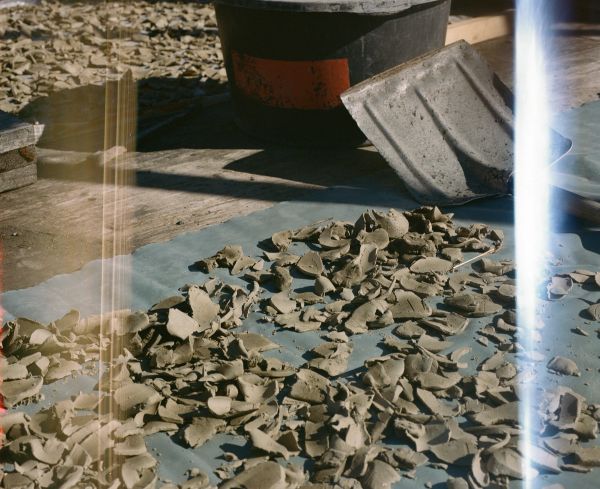
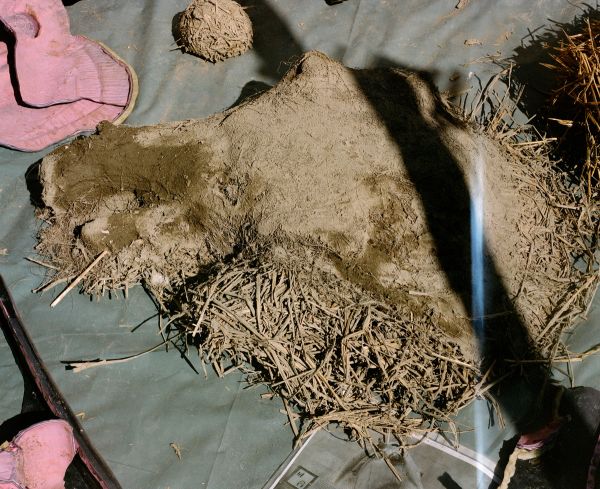
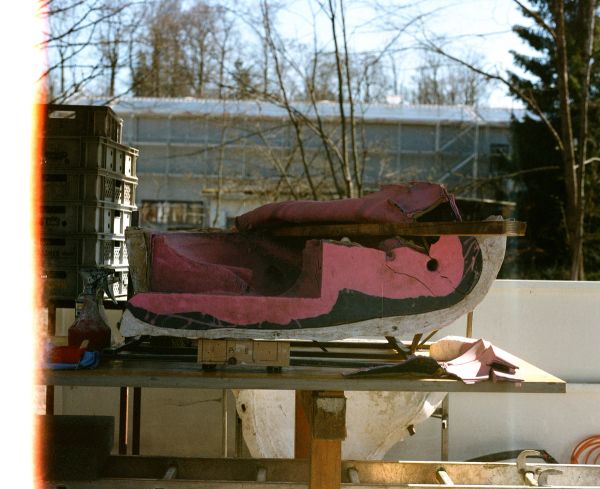
The insights gained from this workshop residency informed a subsequent material development phase conducted in collaboration with Bauhaus Earth. This study focused on formulating and testing earth-based composites using fibres sourced from the bioregion surrounding the Villa Filanda Antonioni (VFA) project. The results guided the selection of fibre–earth mixtures for the future prototypes, balancing performance criteria such as insulation with opportunities for expressive architectural and surface detailing.
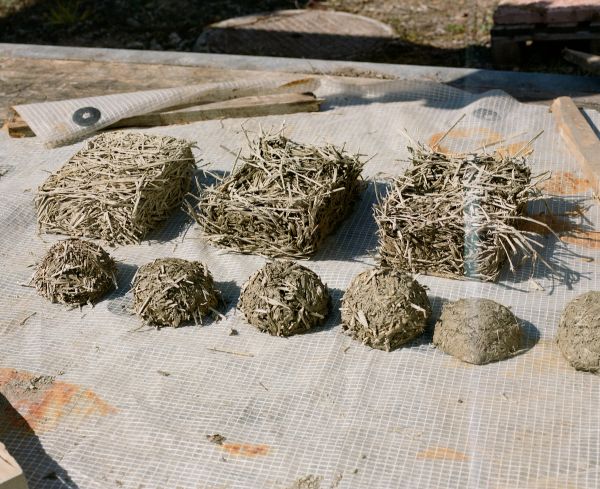
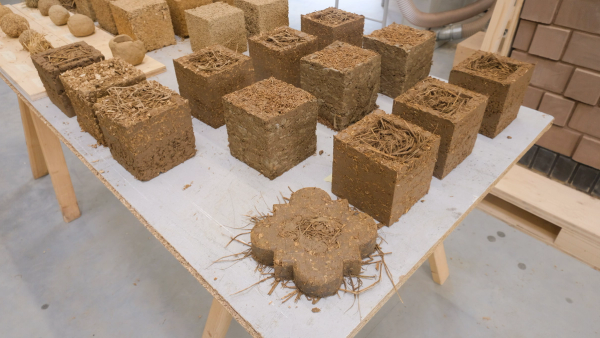
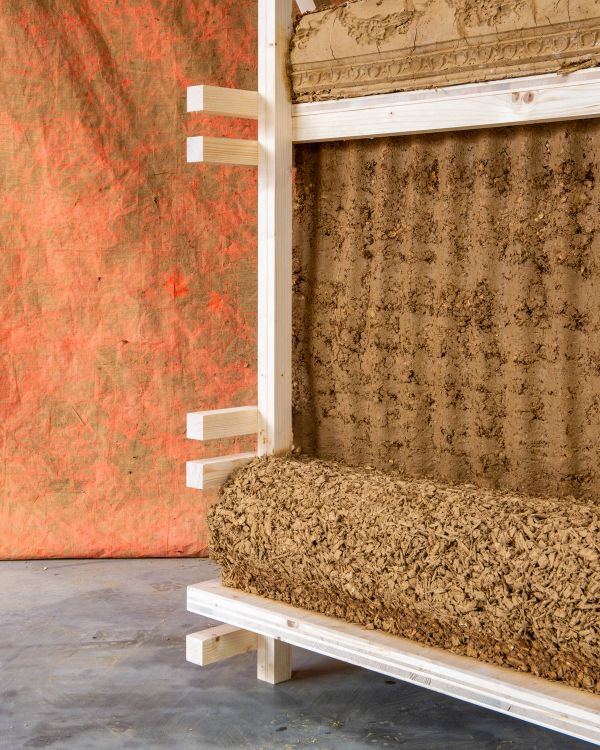
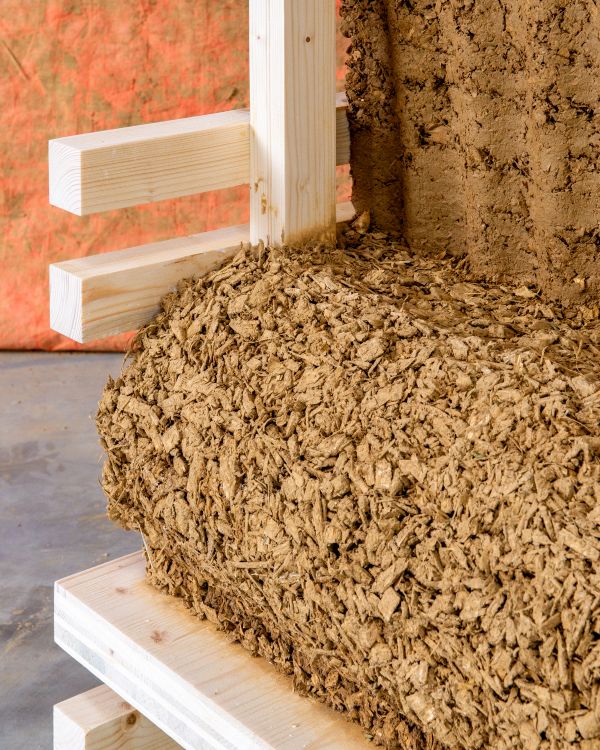
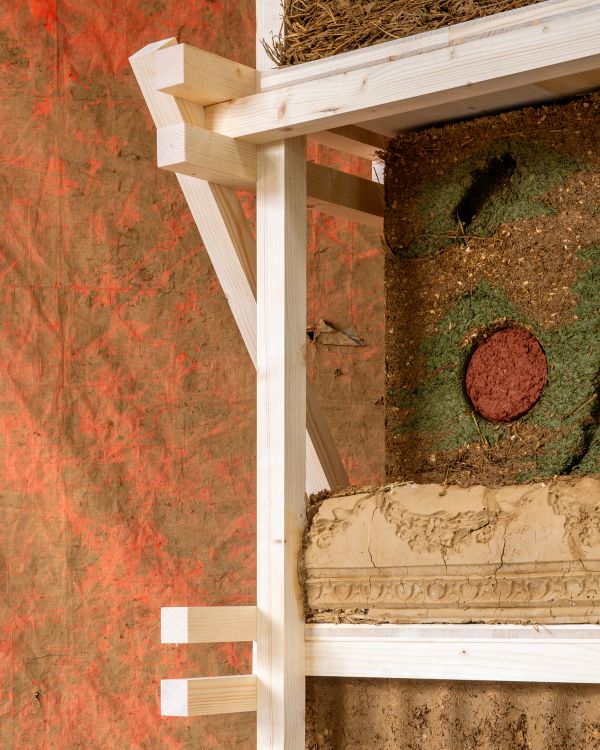
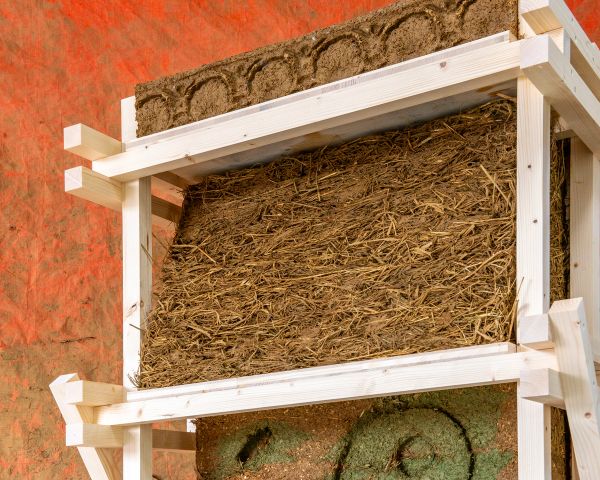
In Phase 3, Lisogorskaya and Song collaborated with the Bauhaus Earth Workshop to develop earth–fibre composite prototypes using fibres sourced from the bioregion of the Treviso project. These experiments informed the design of a Light Earth sculpture, which combines bespoke shuttering and standard moulds in creative configurations. Built at Atelier Gardens in Berlin, the sculpture serves as a demonstrator of the formal and textural possibilities of Light Earth as an architectural material. The final prototype is a sculptural demonstration of a variety of light earth mixtures, showcasing the aesthetic and technical results of different imprinting and pressing methods. The focus was on using fibres readily available in northern Italy, including wheat and rice straw, husk, wood chips, sawdust, and recycled cotton, supplemented with flax.
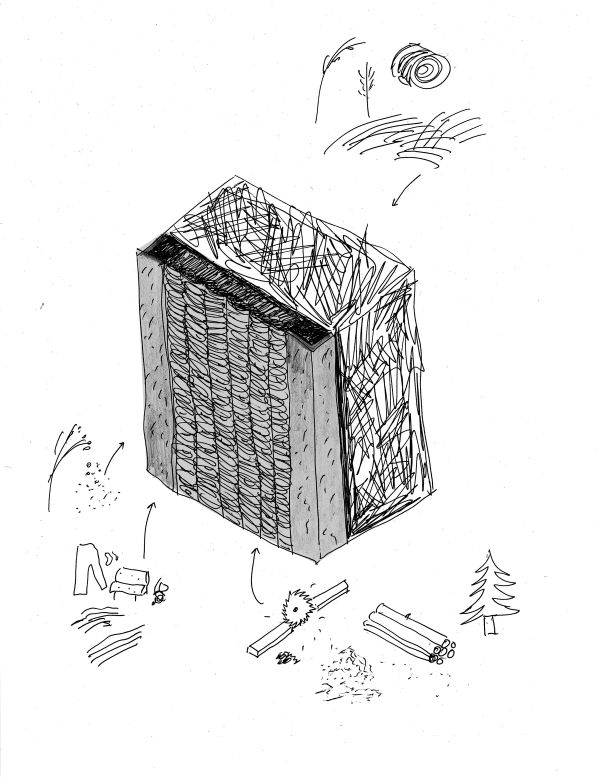
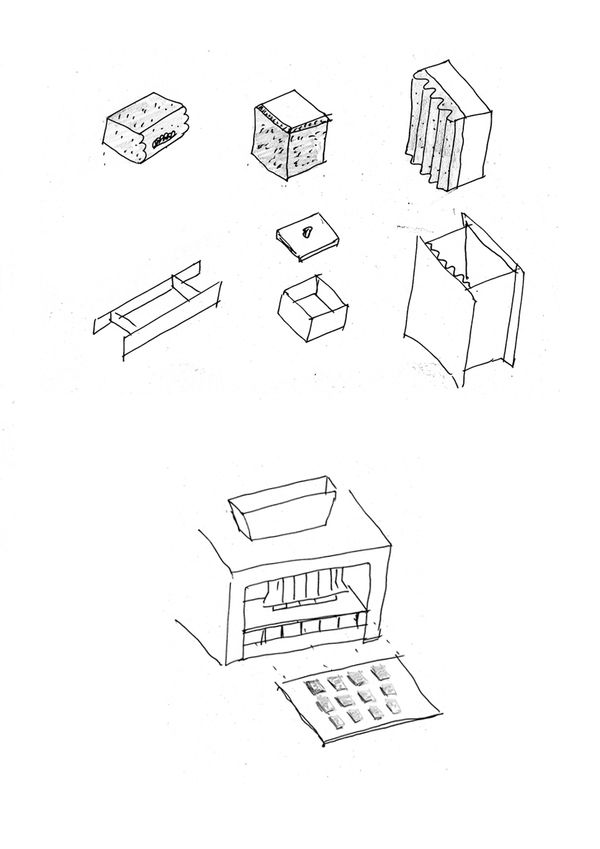
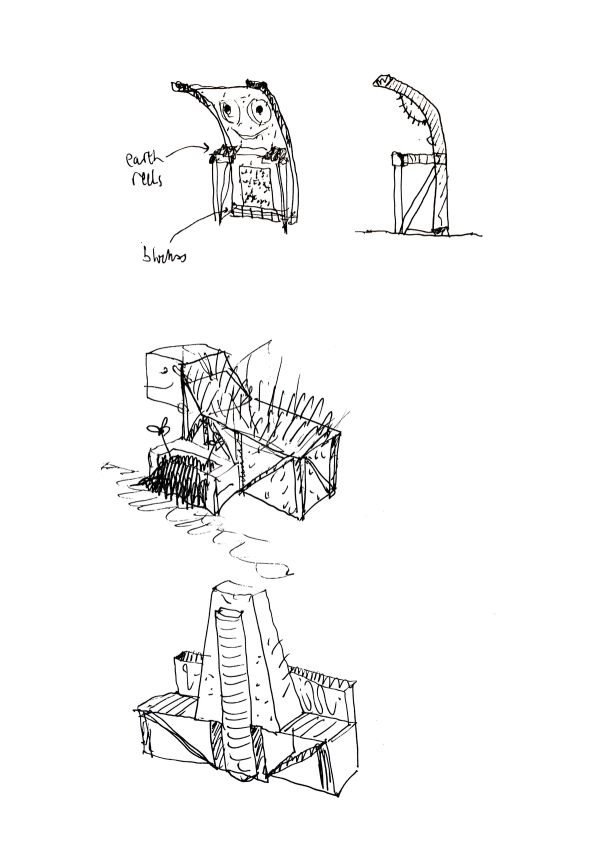
Construction studies using light earth, drawings courtesy of Maria Lisogorskaya and Kaye Song
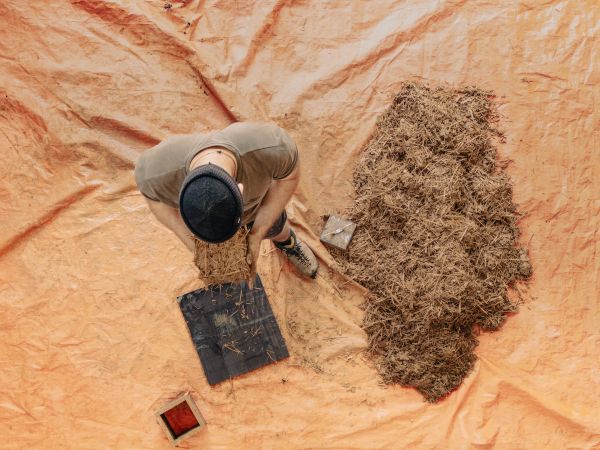
Prototype testing, all photos in this series by Raquel Gómez Delgado
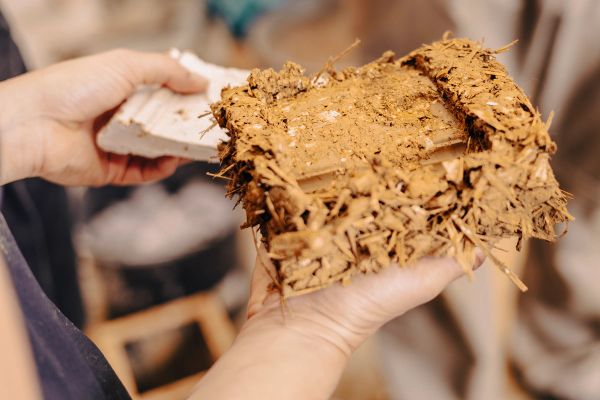
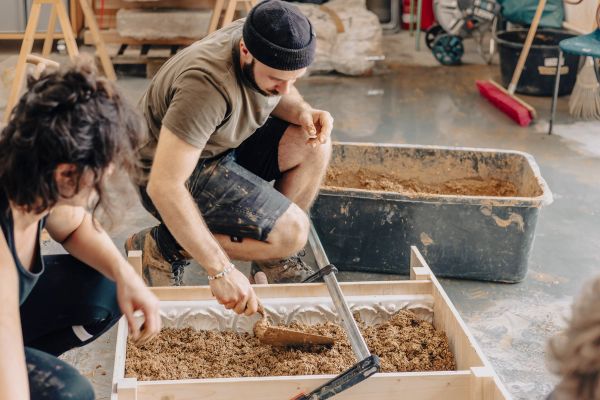
Prototype testing, all photos in this series by Raquel Gómez Delgado
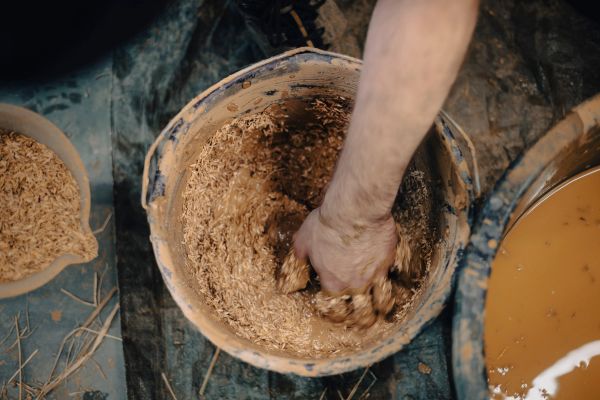
The prototype was directly informed by the prior fibre-earth testing study. Three key variables – fibre properties, water content, and the earth-to-aggregate ratio – were systematically tested in small-scale blocks, documenting their effects on workability, cohesion, surface formation, abrasion, thermal behaviour, and overall material performance. Rather than seeking a single optimal mixture, the study mapped a spectrum of behaviours, highlighting how variations in composition and process influence both functional and aesthetic outcomes.
Throughout both the testing and prototyping phases, simple and reproducible procedures were employed. Manual mixing and basic tools ensured that the insights gained could be transferred to other contexts, while meticulous documentation captured preparation processes, material behaviour, and aesthetic results. This iterative, dialogic approach between scientific study and artistic experimentation enabled the final prototype to serve not only as a proof of concept but also as a bridge toward potential applications in the Villa Filanda Antonini project, demonstrating the structural, ornamental, and performative capacities of fibre–earth composites.
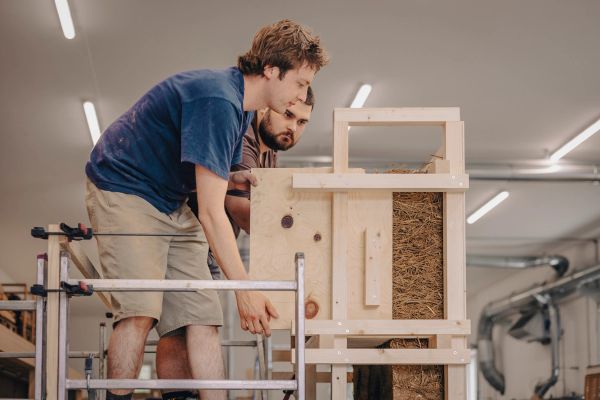
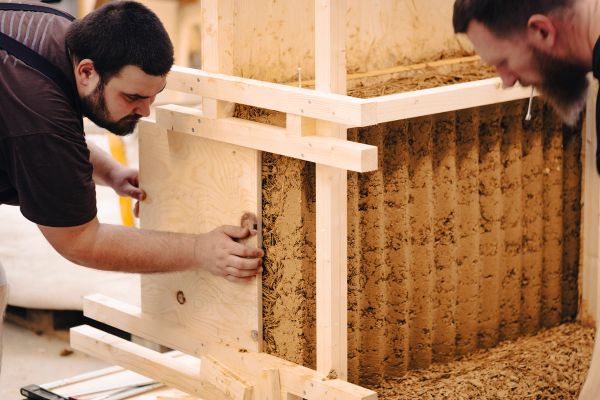
Prototype assembly at the Bauhaus Earth workshop, photo by Raquel Gómez Delgado
The formwork was designed using shuttering ply, workshop scraps, and materials sourced from builders’ merchants or the decorative architecture industry to create texture, detail, and variation. These were clamped onto a softwood timber framework, allowing the prototype to be cast in parts, each demonstrating specific methods and mixtures. Constructed between 16–18 July and 21–23 July 2025, the structure was designed by Assemble, fabricated under the guidance of Bauhaus Earth, and built by Ludwig Acker and Mattis Kindorf.
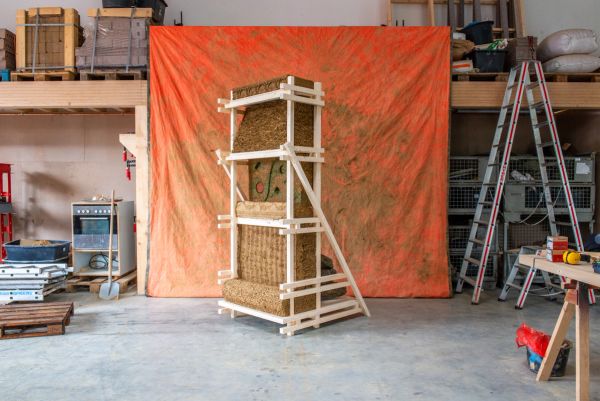
Final prototype, a sculptural demonstration of a variety of light earth mixtures, photos courtesy of Maria Lisogorskaya and Kaye Song