The first Fellows at Bauhaus Earth were Summer Islam, George Massoud and Paloma Gormley from Material Cultures in London. Their project Constructive Land Berlin/Brandenburg investigates the relationship between regenerative land management systems and the built environment – in this case, the rewetting of peatlands in the Sernitz lowlands in Greiffenberg, a district of Angermünde in northeastern Brandenburg.
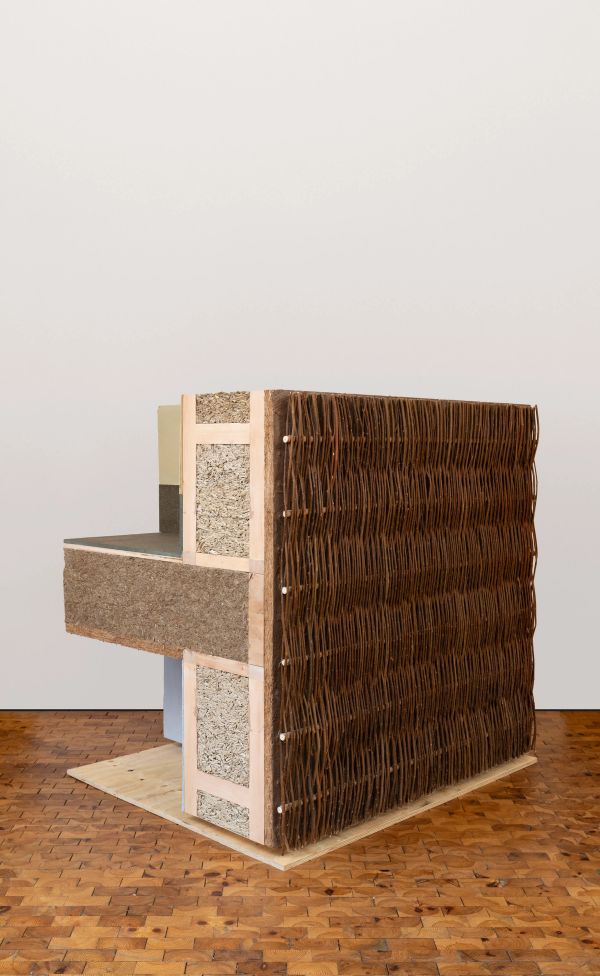
The results of the project are published in the report Wetlands and Construction: An opportunity for Berlin-Brandenburg and prototypical Paludi construction fragments, which have been presented as a contribution to the exhibition ‘The Great Repair’ at the Akademie der Künste, Berlin.
In their Experimental Fellowship with Bauhaus Earth project, Material Cultures built off of the methodology of their ongoing research on sustainable forestry and regenerative land management in the UK, Constructive Land. Their project investigated the potential of rewetting peatlands in Brandenburg for the production of regional bio-based building materials. The project represents the experimental transfer of the previously developed methods to a new political, climatic, and cultural context: from the North-East and Yorkshire in the UK to Berlin and Brandenburg. This transfer reveals universal and specific properties of the methodology and tests its suitability for use in different contexts.
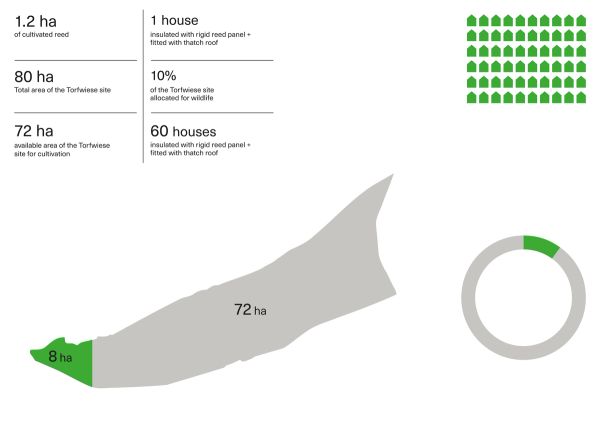
Sernitzmoor in Brandenburg with the toMOORow site outlined, courtesy of Material Cultures
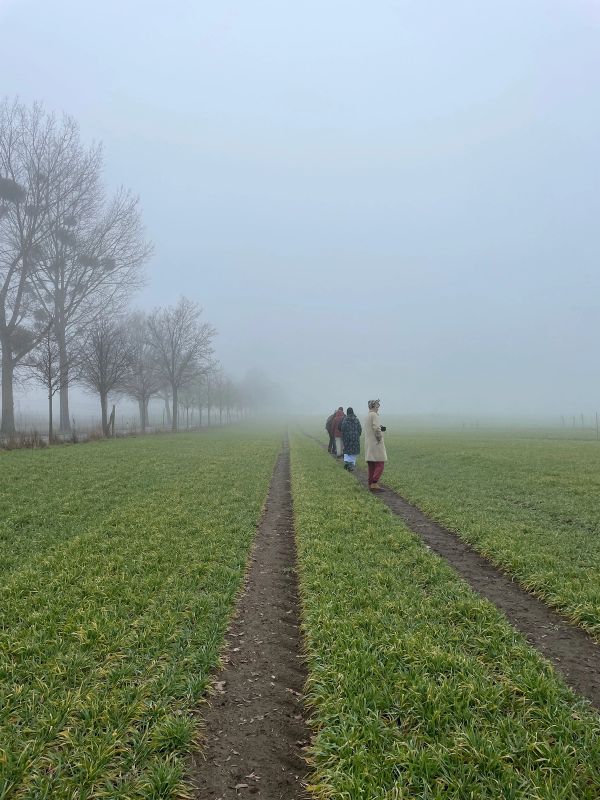
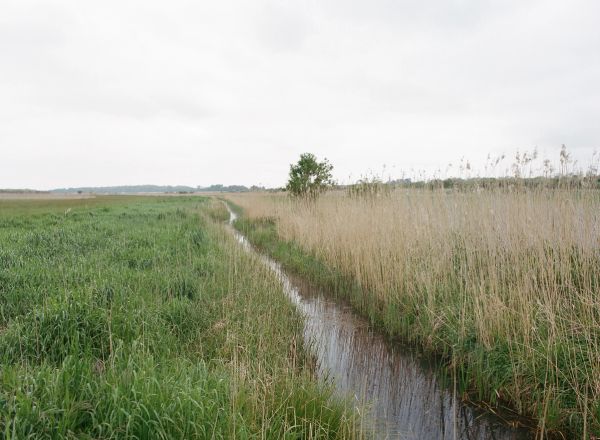
Field trip to Sernitzmoor, photo by Zara Pfeifer
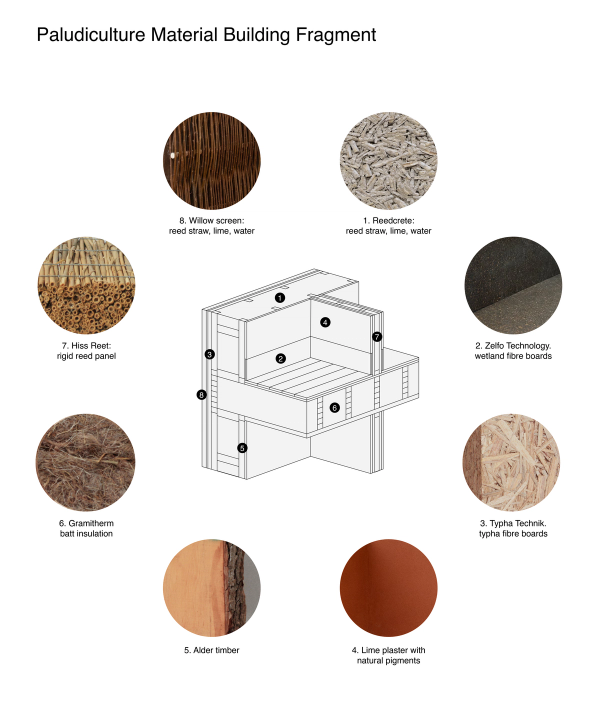
Paludiculture material building fragment, courtesy of Material Cultures
If current peatland emissions continue, they will consume 41% of the remaining carbon budget to restrict global warming below +1.5 °C. Despite this forecast, peatlands can be restored by ‘rewetting’ drained and degraded areas, a process which safeguards and expands their carbon stores. As wetland sediments and debris build up, stores of carbon do too, and rewetted peatland areas have the potential to significantly contribute to emissions reductions. For example, rewetting just 3% of agricultural land in the EU could reduce agriculture-derived GHG emissions by up to 25%.6
Wider benefits of peatland rewetting include increased biodiversity and the regeneration of vegetation and freshwater filtration systems, with new water sources and changes in soil composition attracting diverse animal species. This process can be driven by human action: by blocking drains or deculverting rivers; or left to animals like beavers to re-engineer the land- scape: building dams and ditches which allow watercourses to naturally expand across floodplains.
But economic and productive benefits also play a role in meaningful land management change. Rewetted peatlands can generate income for farming communities and help to decarbonise the construction sector, supporting the delivery of housing. Using the Sernitzmoor, an area of spring bog peatland in the north-east of Brandenburg as a study area, this report examines how sustainable building material production through paludiculture can be accommodated on rewetted peatlands.
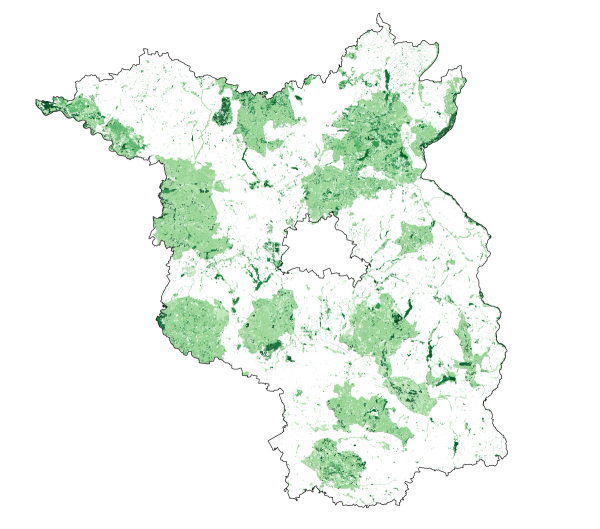
Wetlands in Brandenburg, map courtesy of Material Cultures
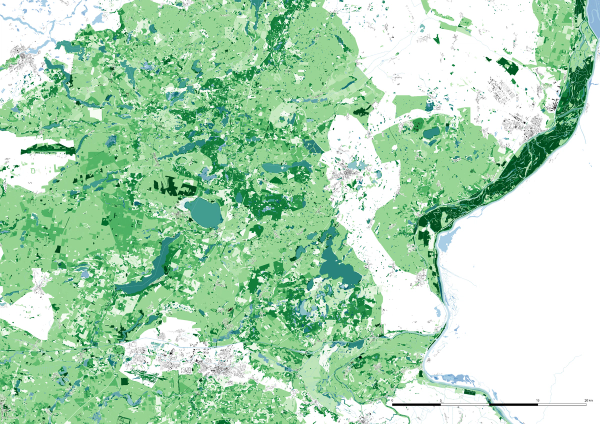
In 2021, the German federal government set a target to rewet 250,000 ha of peatland by 2030. Brandenburg is well placed to contribute to this target. With 93% of its wetlands drained, large-scale rewetting projects in the state could substantially reduce Germany’s GHG emissions and increase its carbon stores. At the same time, Germany will require 2.9 million additional dwellings by 20257, meaning that paludiculture cultivation for construction materials has the potential to alleviate a deepening housing crisis. This report explores how reed, grasses and other paludiculture crops can be cultivated in the Brandenburg region to replace intensive agriculture practices and economically benefit farmers who own and work the land. The report also examines how such an industry could support housebuilding and address a significant housing demand in the Berlin-Brandenburg region.
Material Cultures have been working with Bauhaus Earth and local manufacturers, farmers and conservationists including the toMOORow Initiative and Greifswald Mire Centre to under- stand the material applications for these crops and how the supply chain for paludiculture construction materials can be supported to scale up and directly benefit from the means of production. While an emerging paludiculture-based construction industry exists in Brandenburg, as evidenced by farms like NaturwiesenHeu, there is latent potential for locally-owned and regionally distributed paludiculture products.
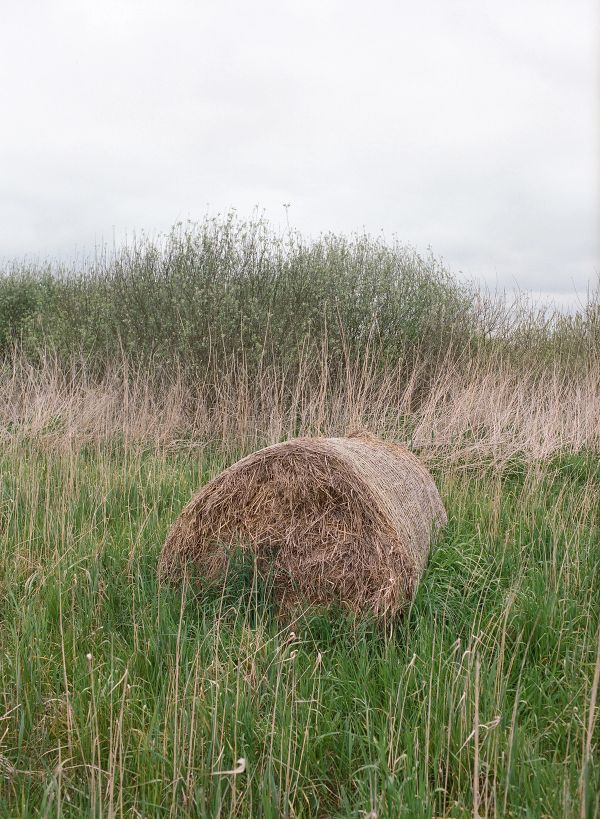
Paludiculture biomass harvested and baled on the Torfwiese site, photo by Zara Pfeifer
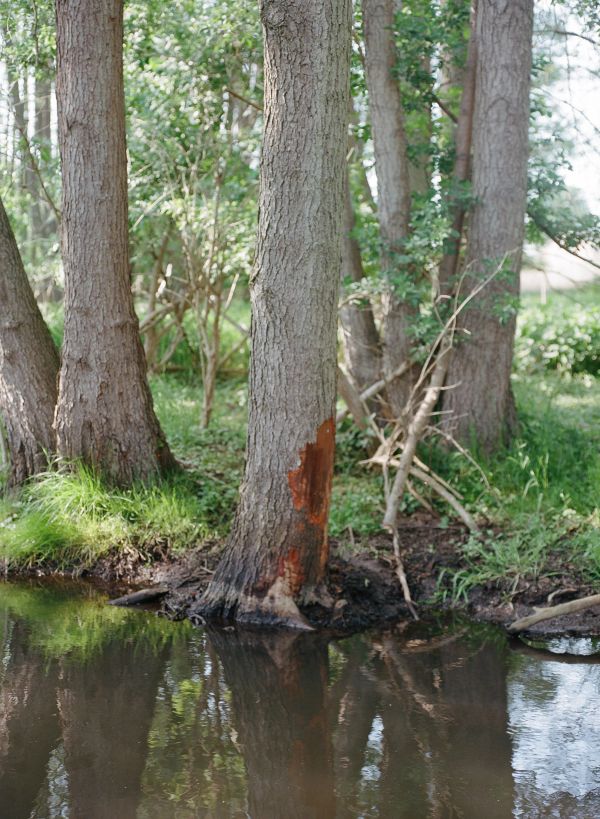
Trees growing in wet conditions, including occasional or seasonal scenarios i.e flooding events, photo by Zara Pfeifer
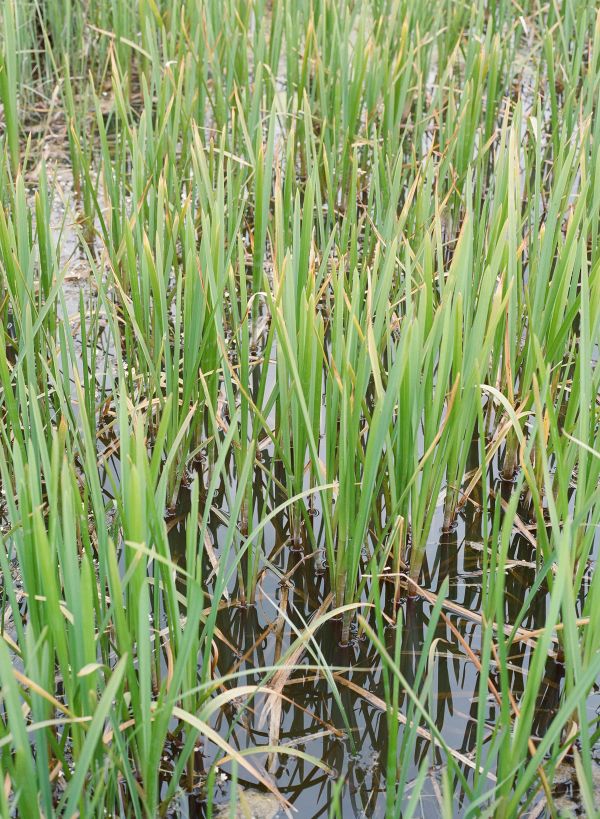
Common Reed growing in Brandenburg's Sernitzmoor, photo by Zara Pfeifer
By understanding the material properties of wetland reeds and grasses, it is clear that a wealth of construction material products can be derived from paludiculture farming. These species’ natural properties allow them to be used in a range of applications, including for structure, insulation and lining; with products ranging from structural straw boards, batt insulation, compressed boards and timber.
At Sernitzmoor, Material Cultures have used an 80 hectare (ha) site as a study area, exploring reed cultivation and its capacity to be processed into materials for house building. Quantifying the amount of reed material required for a detached home’s entire insulation and roofing needs, their research shows that this 80 ha site could supply enough material for the construction of 60 houses, with the essential inclusion of a 10% (8 ha) biodiversity buffer.
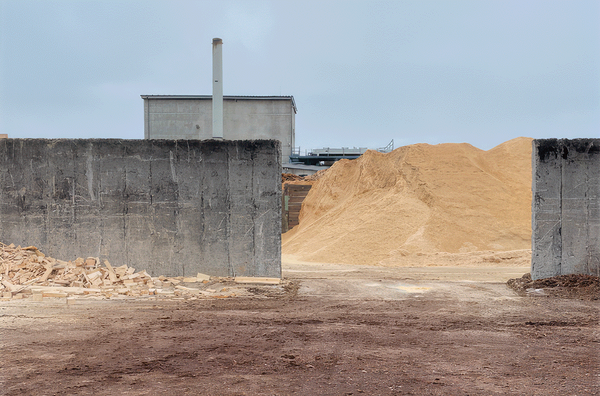
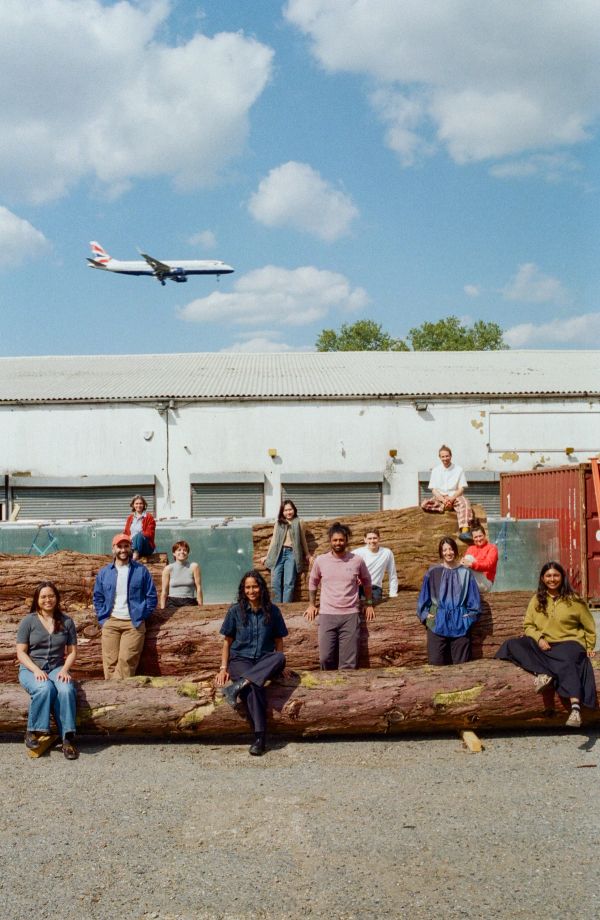
The yard of ROBETA Holz sawmill, photo by Zara Pfeifer
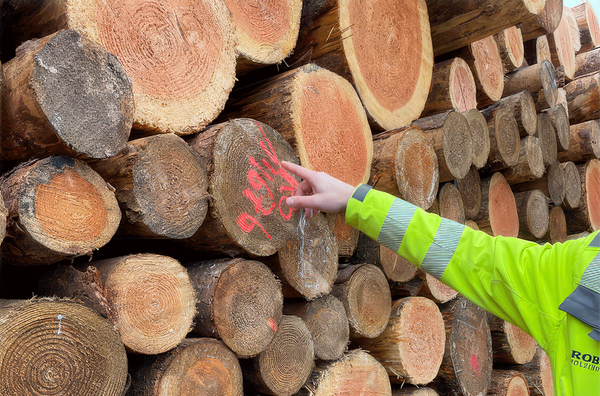
Unmilled logs at ROBETA Holz sawmill, photo by Zara Pfeifer
This means that a single house can be built from reed harvested in roughly a hectare of land. Although this land analysis has been made based on the construction of a detached home, it is clear that more efficient typologies, such as apartment blocks would lead to materials savings, meaning that the same site could provide for even more homes. If this model was expanded across the 250,000 ha of peatlands the German government intends to rewet by 2030, there is potential for this land to supply construction materials for up to 1875,000 homes per year while actively sequestering carbon in both soil and building.
The first phase of the fellowship resulted in a research report Wetlands and Construction: An Opportunity for Berlin-Brandenburg that examined the problem of drained peatlands and the potential of rewetting them. The report found that well-planned peatland restoration can not only mitigate current CO2 emissions, but can also produce a variety of building materials from perennial biomass. This includes plants such as reeds, sedges, reed canary grass, typha, willow, and alder wood.
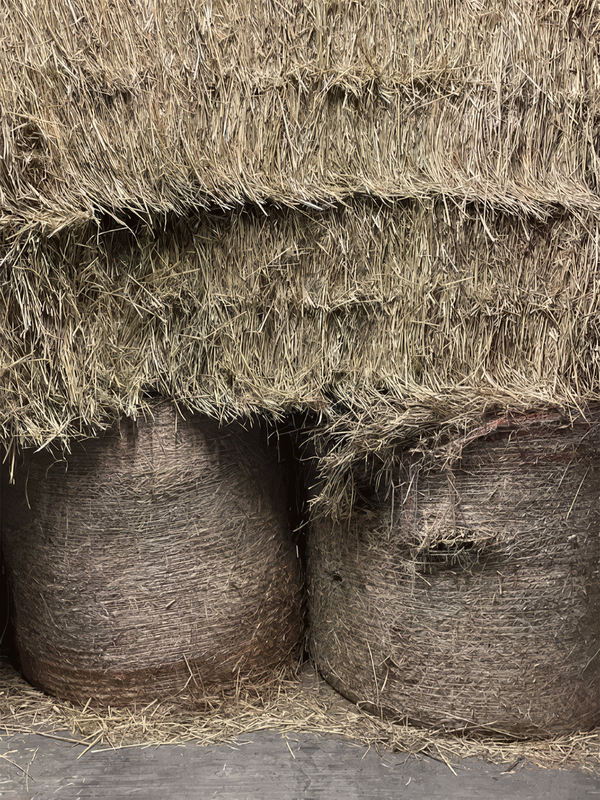
Baled wetland grasses, photo by Zara Pfeifer
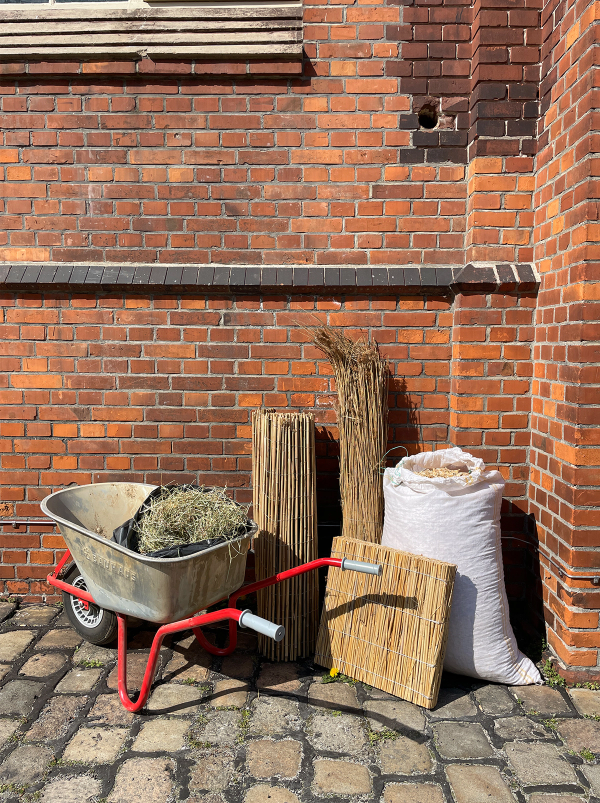
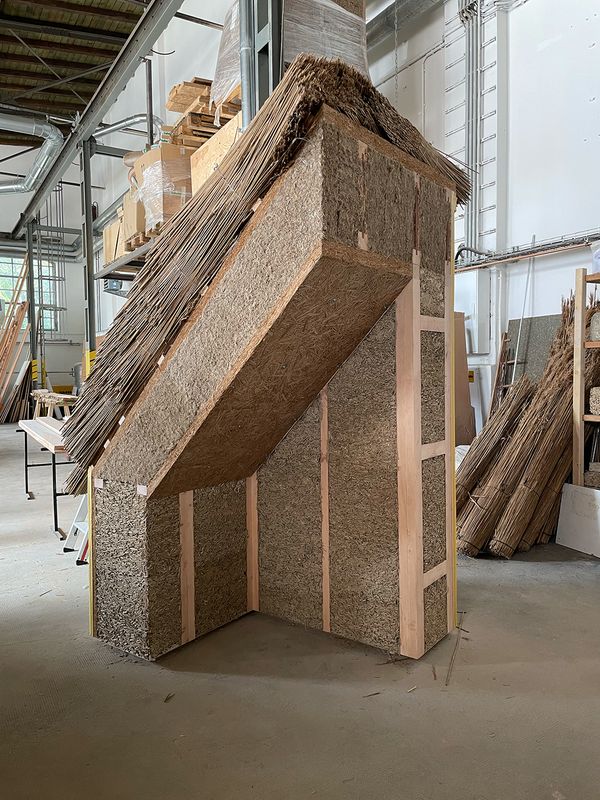
Physical demonstrator, photo by Zara Pfeifer
During the second phase, a two-part prototype of 1:1 building fragments was built in the Bauhaus Earth Marienpark LAB using various paludiculture-based materials. By tangibly demonstrating the use of carbon-negative materials cultivated on rewetted peatlands, it aimed to promote peatland carbon capture and support a regional, bio-based building industry. The paludiculture “Fragment” was displayed at ‘The Great Repair’ exhibition by ARCH+ at the Akademie der Künste, Berlin, and Kreis statt Krise exhibition by Cradle to Cradle NGO at Freiraum in Der Box, Berlin.
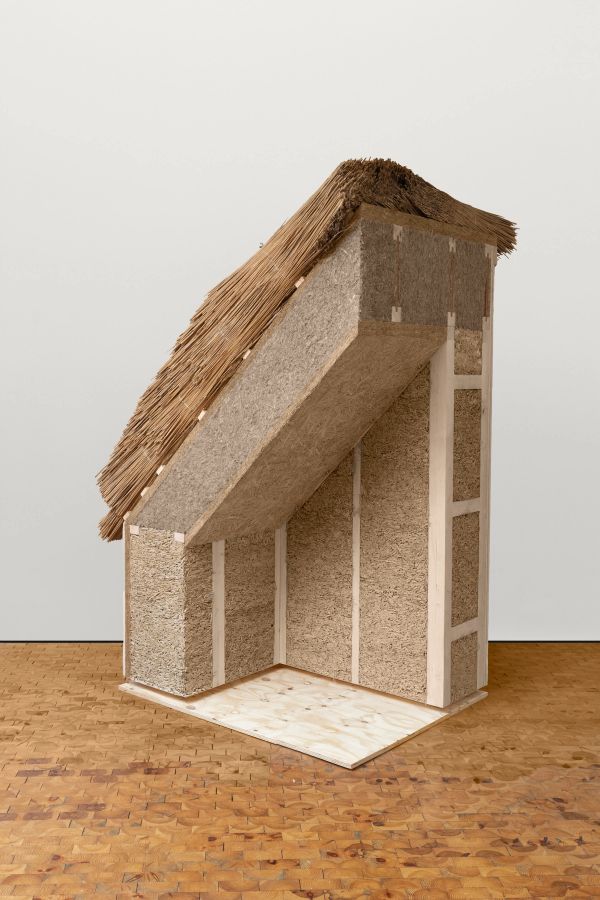
Physical demonstrator, reed roof thatching, Akademie der Künste, photo by Joanna Wilk
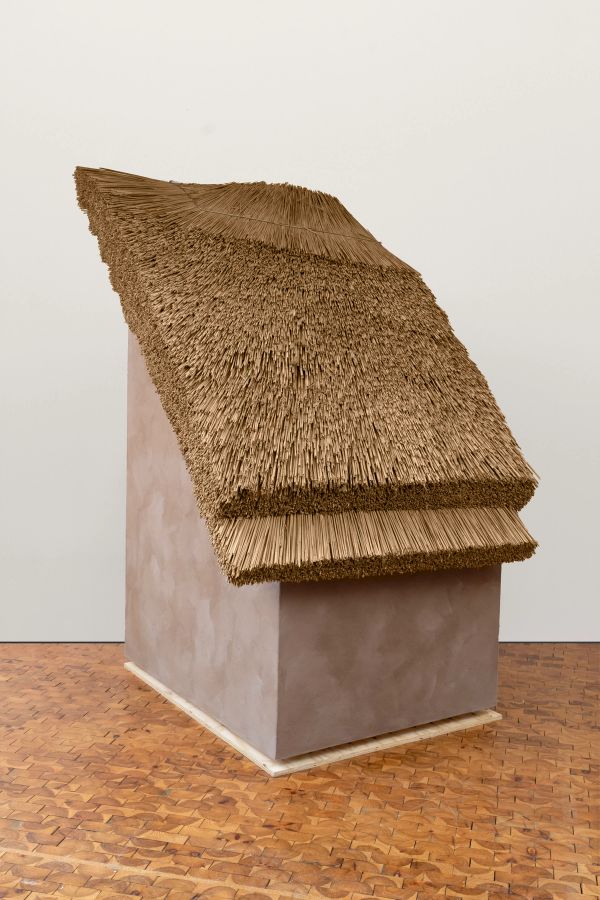
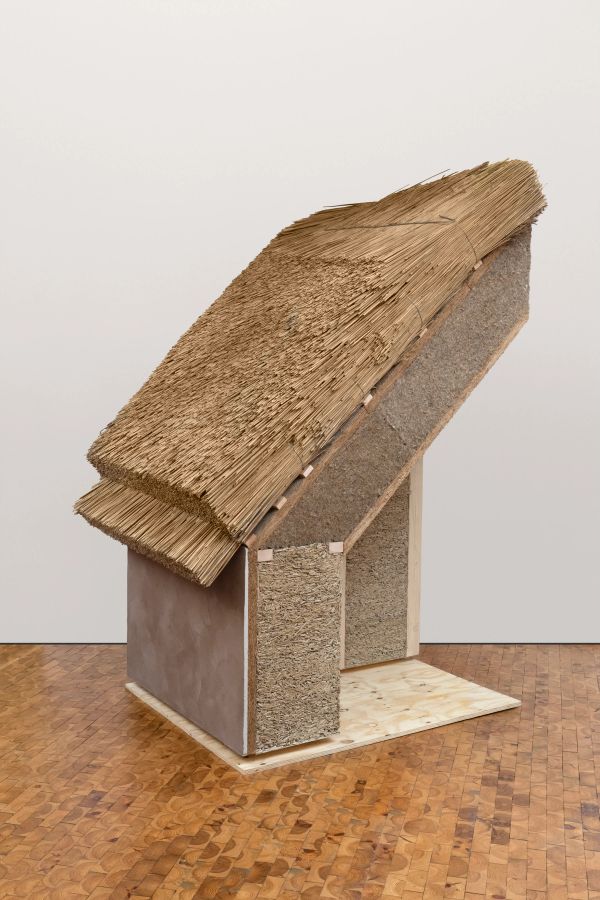
Several barriers to the expansion of a paludiculture construction products sector exist. Challenges include limited consumer demand, cultural misconceptions about paludiculture products, limited manufacturing capacity and untested routes for capital investment in such initiatives. However, a range of actions could overcome these hurdles including state subsidies, the scaling of manufacture and the development of cooperative business models which ensure value generated by final products is retained by producers. By supporting the development of landowner-led paludiculture and high-value construction products, an economic incentive to expand rewetting initiatives is created. By testing and scaling this model internationally, this land use strategy has significant potential not only to deliver homes and decarbonise the construction sector but also to sequester carbon and restore wildlife, addressing the polycrisis of climate, biodiversity and housing.
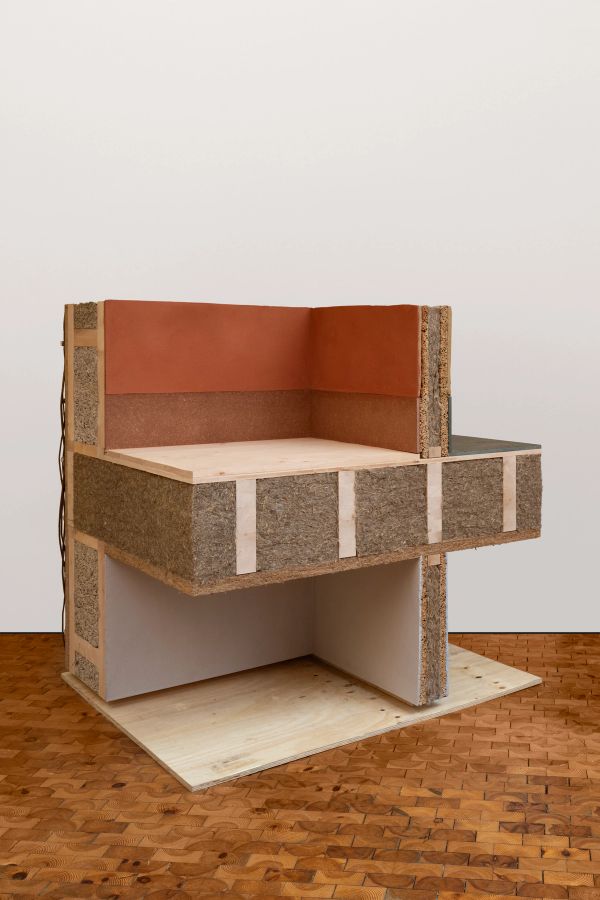
Physical demonstrator, reed insulation, Akademie der Künste, photo by Joanna Wilk